Suddenly.
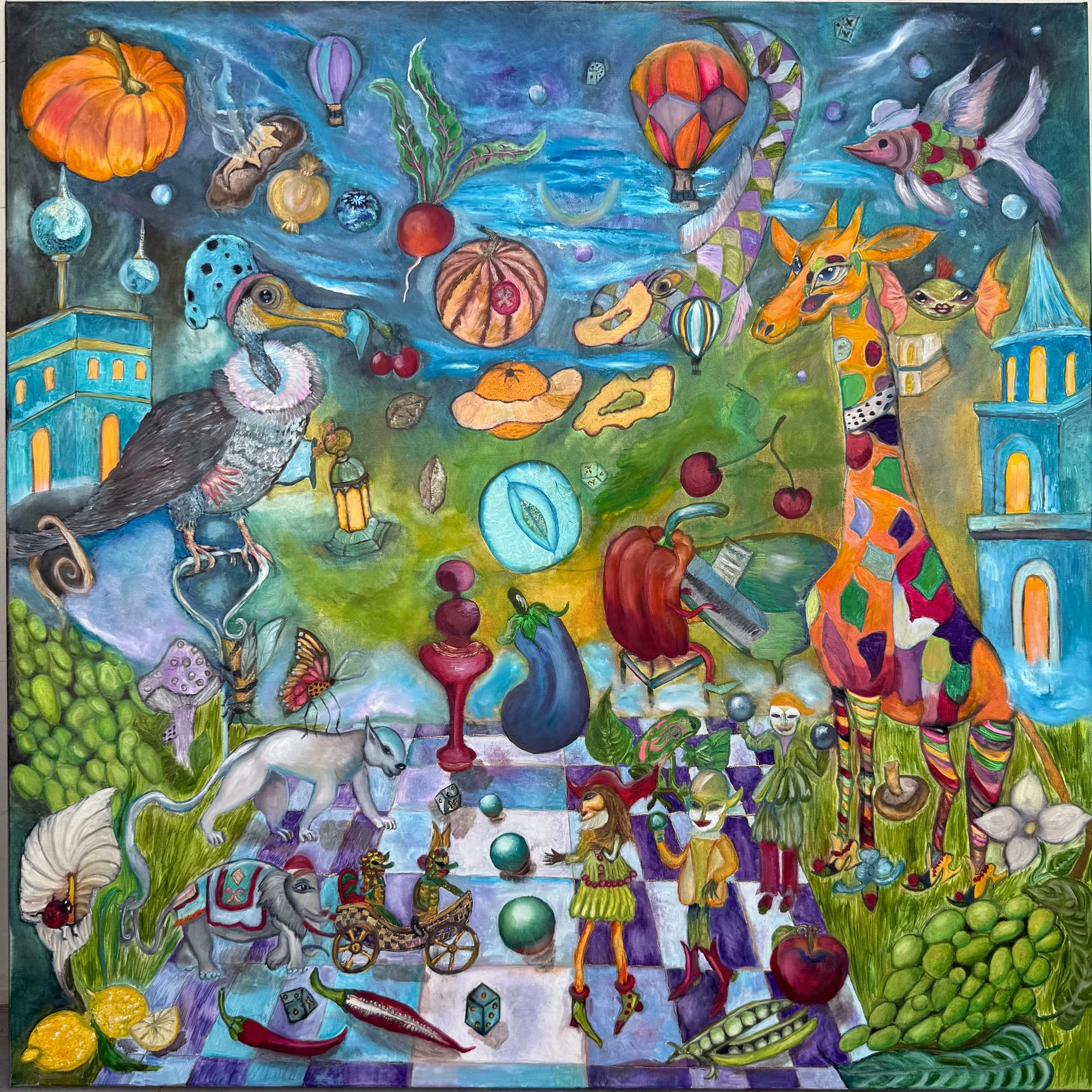
Sometimes a person does not notice how his own life is disappearing.
Not tragic. Not sudden.
It slips away quietly, almost silently, like water slipping through your fingers during conversations, checking email, and endless "a little later." We live in an era where speed has become the new virtue. Respond faster. Move faster. Achieve faster. Forget fatigue faster. And somewhere between notifications, deadlines, and the anxiety of not being productive enough, people have begun to lose not time, but themselves.
The real catastrophe of modern times isn't the lack of hours. We all still have the same twenty-four. The catastrophe is that moments have lost their depth. A day can be filled to the brim and yet remain internally empty, like a room with the lights off. We increasingly exist in a state of waiting for life: after a move, after love, after recognition, after money, after the right moment. But life doesn't like drafts. It only happens now.
That's why the idea that the quality of a moment lived is more important than its speed sounds almost like a quiet rebellion against the times. It's not the number of events that determines the fullness of existence, but the degree of presence within them. One attentive evening can be worth more than an entire month lived automatically. Sometimes a cup of tea, sipped in complete silence, brings a person back to reality more powerfully than expensive trips and endless changes of scenery.
We're used to thinking of time as an enemy. People try to defeat it with planning, optimization, and efficiency systems. But the more fiercely a person fights time, the faster they begin to feel their own disappearance. Because time cannot be defeated. You can only enter into a relationship with it.
There's a special kind of fatigue familiar to almost every adult: when the years pass as if in fast motion. Just yesterday it was January. Just recently it was childhood. Just recently there were people who are no longer around. And this anxiety arises not from the aging body, but from a feeling of unlivedness. As if life was happening somewhere nearby, but not within us.
Perhaps the art of stopping time doesn't mean stopping the clock. It's the ability to expand the moment with your presence. To gaze at the evening sky as if it were the first time. To listen to someone without letting your thoughts wander to the next conversation. To walk down the street not as a courier of your own anxiety, but as a witness to the world.
Modern man has learned to speed up everything except his own soul. The soul still loves slowness: breathing, touch, silence, contemplation, real conversations without looking at a screen every ten seconds. Perhaps that's why we're so drawn to the sea, to fire, to rain, to art. All greatness exists without haste.
Sometimes it seems like time isn't a line, but depth. And a person who can truly be alive within a single moment experiences more than someone who rushes endlessly forward.
Because life is not measured by speed.
And the degree of presence in one's own existence. And then the most difficult question arises:
If life slips away not because of a lack of time, but because of a lack of presence, then why is a person so afraid to stop?
Perhaps because silence always speaks the truth. While we're running, we maintain the illusion of moving toward something important. But the moment we slow down, things that have long lain dormant begin to surface: fatigue, loneliness, unprocessed pain, the feeling of someone else's life being lived instead of our own. Many people don't speed up for success. They speed up so as not to hear their own emptiness.
The modern world has built an amazing distraction machine. People are never alone anymore. The screen becomes an extension of consciousness, endless information replaces internal dialogue, and noise creates a feeling of fullness. But the paradox is that
