Believe and see: science and faith are two wings of knowledge.
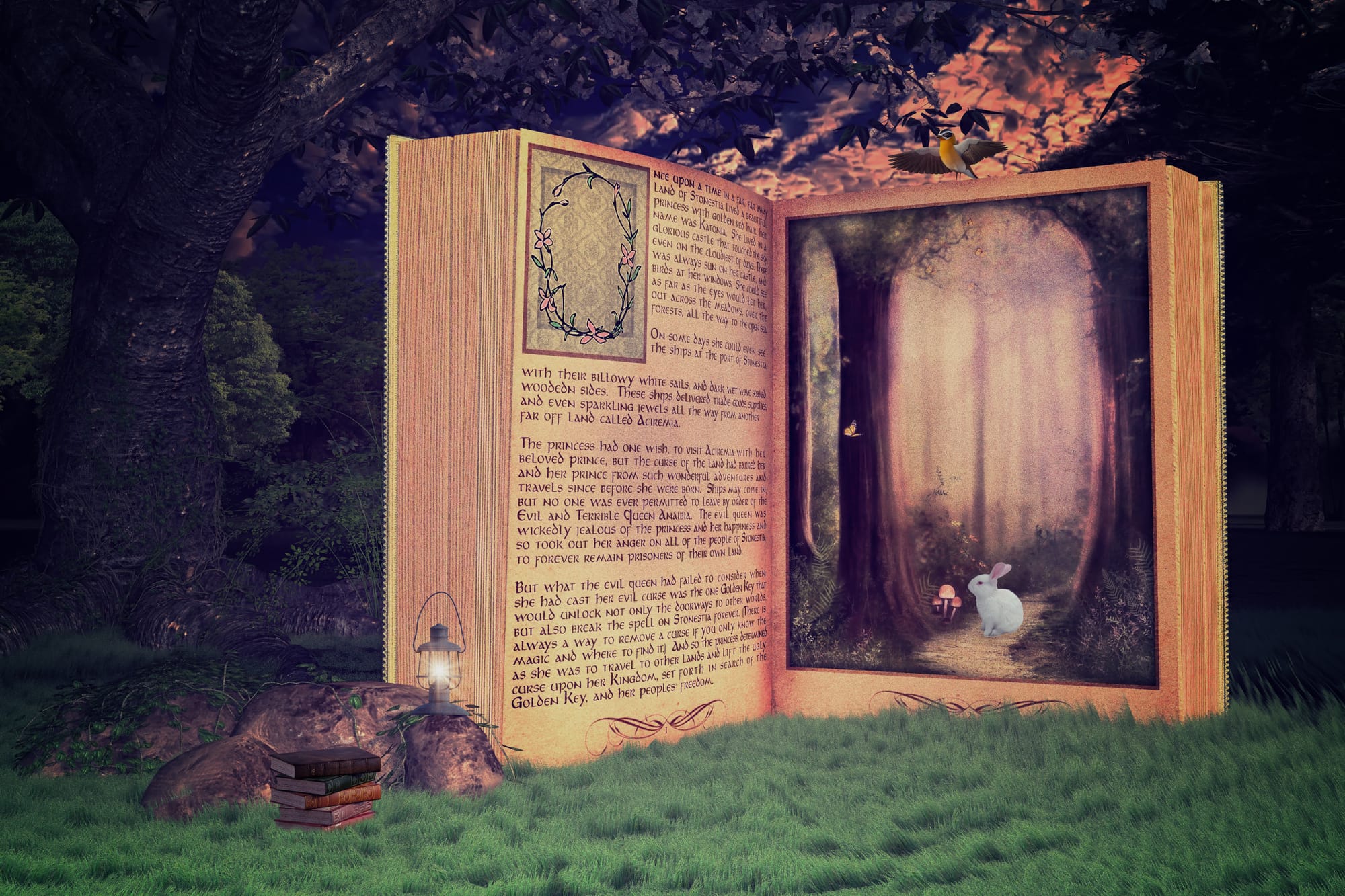
There are books that don't so much provide ready-made answers as open doors. Michael Gillen, in his work "Believe and See," writes about the journey from atheism to faith, from the certainty that science will explain everything, to the discovery of the limits of the scientific method and the experience of trust that can no longer be reduced to an equation or proof.
This is not a book about opposition. Rather, it is about encounter. About how the two wings of the human spirit—the rational and the contemplative—begin to work together. Science teaches us to look, to measure, to test. Faith teaches us to see the invisible, to trust what has not yet manifested itself, but lives as a possibility. One without the other is impoverished: knowledge without faith turns into a cold mechanism, faith without knowledge into superstition. But when they unite, a truly holistic vision is born.
Gillen speaks simply, but behind his words lies the experience of a physicist who has worked with the mysteries of space and matter. It was science that showed him that the world is more complex and mysterious than materialism suggests. Quantum paradoxes, the vastness of space, the impossibility of "explaining everything"—these are cracks in the wall of rationalism through which another dimension emerges. And in this crack, where evidence ends, faith is born.
This idea is especially important for "The Central Planet." We speak of man as a being of transition, an artist, a philosopher, a scientist who goes deeper into reality and sees that beyond what is visible, there is always more hidden. Faith is not the opposite of knowledge, but its continuation in a direction where the mind no longer holds an answer, but the heart still searches.
"Believe and See" is a title that can be read as a challenge. We're accustomed to the opposite: "Seeing is believing." But the book offers a reversal of perspective: trust, taking a step forward, opens up new horizons. We see only as much as we can trust.
Can this be called mysticism? Yes. Can this be called science? To some extent, too. But rather, it is a space where boundaries are blurred, and a person understands for the first time that he is not a disjointed observer, but part of a greater history that is greater than himself.
Faith, as trust, is what helps us live in an era of uncertainty. When systems collapse, when forecasts fail, when the mathematics of the world suddenly proves vulnerable, it is faith that keeps us on track. It is not blindness. It is a way to see deeper.
And so Gillen's words become important not only for theologians and scientists, but for each of us. After all, everyone lives by their own worldview. Everyone, even unwittingly, answers the questions: "Why do I live?", "What is truth?", "Where does my path lead?" And in these answers lies faith, even if we call it something else.
Perhaps this is the magic of the human path: believe, and then you will see.
