Quantum labyrinth.
The Quantum Labyrinth: How Richard Feynman and John Wheeler Revolutionized Time and Reality (David Kaiser) is a popular science study of the friendship and collaboration between two eminent 20th-century physicists: John Wheeler and Richard Feynman.
She says:
- About the beginning of Feynman's career - his graduate years under Wheeler and the search for new ways to describe nature.
- On the “single electron” idea—the bold hypothesis that all electrons in the Universe are actually the same electron, moving back and forth in time.
- On the development of quantum electrodynamics and the unconventional approaches that helped Feynman invent his diagrams and win the Nobel Prize.
- About the philosophy of time and reality - how they discussed the paradoxes of causality, the arrow of time, the possibility of moving backwards.
- About the human side of science: their correspondence, friendship, and courage to go against established views.
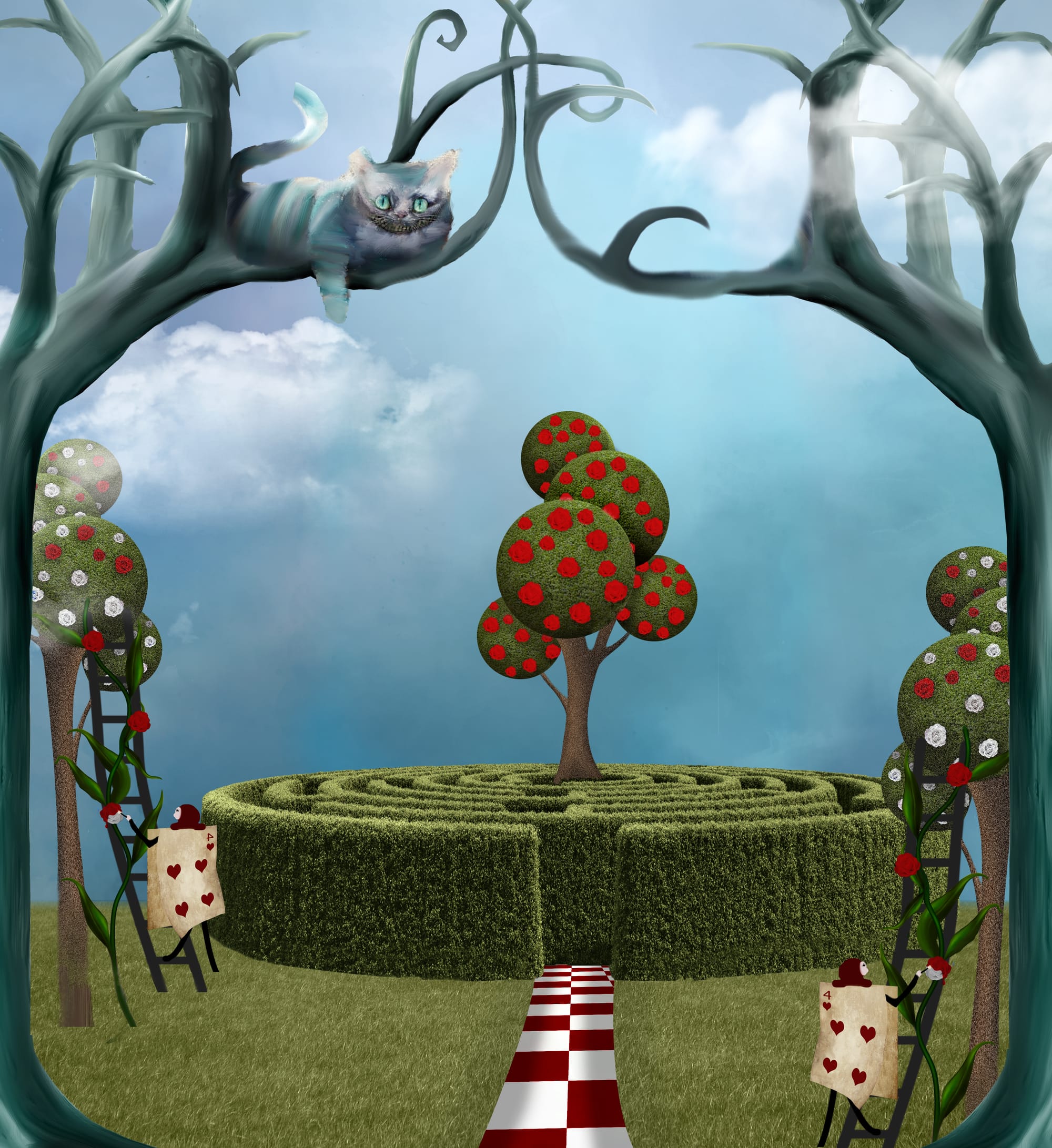
The title "Quantum Labyrinth" refers to the fact that quantum physics is like a tangled passage where conventional logic breaks down: time can be nonlinear, particles can be indistinguishable, and reality can be multilayered.
This is not a physics textbook, but rather a story of ideas, courage and the play of the mind, shown through the fates of two scientists.
The Quantum Labyrinth: On the Courage to Go Against Time
There are science books that read like textbooks, and others that become maps for an inner journey. "The Quantum Labyrinth" is one of those. It's written about physicists, but at its core, it's about humans, about how they can push the boundaries of the visible and believe in the impossible.
At the center of the story are John Wheeler and Richard Feynman. Two different men, two different personalities, but one burning desire: a desire to peer into the depths of conventional logic. Their ideas were daring: perhaps there was only one electron in the universe, and time not only flowed forward but also retreated. This hypothesis didn't just seem crazy—it changed our very understanding of reality.
The labyrinth here isn't just a metaphor for quantum theory. It's the path of a person navigating doubts, fears, colleagues' laughter, and their own mistakes. After all, any true search is like wandering: a step forward, a dead end, a turn back, and then back to the center. In this sense, science is little different from life.
Feynman with his diagrams and Wheeler with his "time games" were searching for more than just equations. They were looking for a way to speak to the Universe in its own language. And in this search, they discovered something close to home for all of us: the world is not linear. We think of ourselves as moving in a straight line—from childhood to old age, from beginning to end. But quantum reality reminds us: timelines can loop, loop back, and connect.
Isn't this how it is with human memory? Isn't this how love or pain comes—suddenly, without a calendar? Isn't this how we sometimes want to rewrite our own past? This is the secret of the "quantum labyrinth": what seems impossible already exists deep within reality.
And yet, this is a book about courage. Wheeler and Feynman weren't afraid to go against conventional wisdom; they saw mistakes not as defeats, but as steps toward discovery. In their story, we can hear an invitation: to live as if the world were larger than we imagined.
"The Quantum Labyrinth" isn't just about physics. It's about you and me, about everyone who's searching for a way out of their own impasse, who feels that time isn't an enemy, but a partner in the game. And if you listen closely, there's always a path in this labyrinth that leads to freedom.
