The Blind Watchmaker
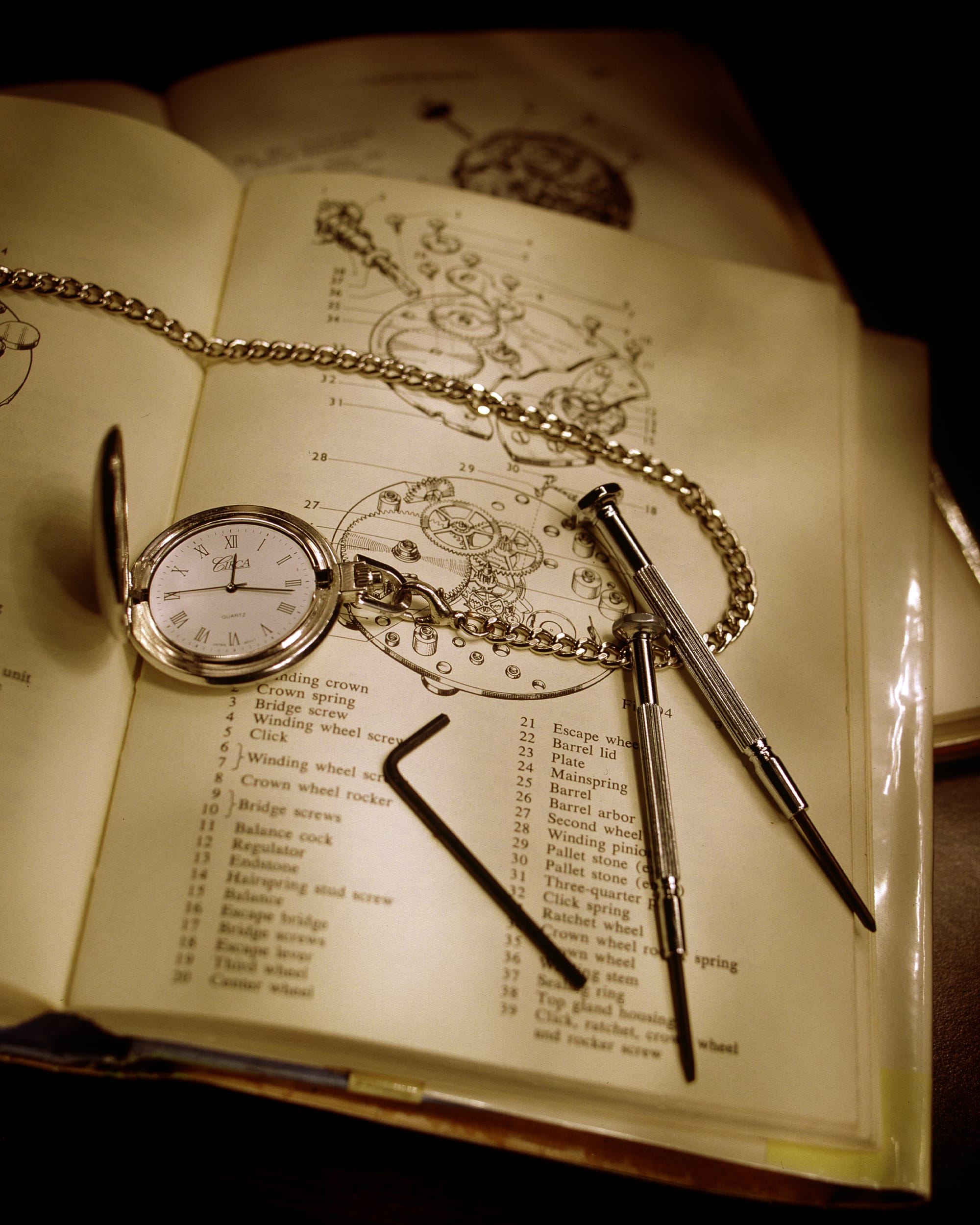
The Blind Watchmaker, by Richard Dawkins, is not just a scientific explanation of the theory of evolution, but an almost meditative dissection of one of humanity's most ancient illusions: the illusion of design where process operates.
We look at the world like a spectator accustomed to the theatre, and therefore in every fold of reality we look for a director, in every coincidence for a script, in every complex structure for the hand of a master, and when an eye with its subtle optics or a wing with its mathematically calibrated lightness appears before us, our thinking almost automatically whispers: this was conceived, this was created, this was designed.
Dawkins enters this silence of conventional belief not as a destroyer, but as a man who slowly turns on the light, and does not raise his voice, does not argue aggressively, but simply shows that the very idea of design is a convenient, but not obligatory hypothesis, because there is another mechanism, much colder, devoid of intention, but still capable of the same grandiose work.
This mechanism is natural selection.
The book unfolds, step by step, an almost invisible logic: if we have minimal changes, if they are inherited, if the environment selects those that provide an advantage, and if this process is repeated countless times, then what emerges is not just change, but accumulation, not just accumulation, but directed complexity, and not just complexity, but a structure that begins to look as if someone knew in advance where everything would end up.
And here comes the main twist: evolution does not know the future, does not plan the outcome, does not strive for perfection, it is not an artist or an architect, it is a selection process that works only with the present moment, and that is why it is called “blind”.
Blind - but not random.
This is a crucial distinction, one that Dawkins makes with almost jeweler's precision: chance provides the raw materials, the variations, the mutations, the chaotic deviations, but selection is not random, it is rigorous, it is ruthless, it filters out everything that does not work and keeps everything that even slightly increases the chances of survival, and in this combination of chaos and filter, an order emerges that, from a distance, begins to seem like a design.
The example of the eye is particularly subtly analyzed in the book—the very organ that was long considered an argument against evolution because it seemed “too complex to have arisen gradually.” Dawkins turns this argument into a sequence of small steps, where each stage—from a light-sensitive spot to a full-fledged lens—provides a minimal but real advantage, and therefore is reinforced, and therefore is passed on, and therefore becomes the basis for the next step.
And suddenly the eye ceases to be a miracle of instant creation and becomes a story, long, slow, almost imperceptible, but at the same time inevitable.
Reading this book, a strange feeling arises: as if the familiar picture of the world is not collapsing, but dissolving like fog, and behind it appears not emptiness, but another form of order - more strict, more impersonal, but at the same time no less beautiful.
Because the beauty here is not in the design, but in the result, not in the intention, but in the process, not in the fact that someone wanted to create complexity, but in the fact that simple rules, repeated millions of times, can give rise to a structure capable of deceiving even our desire to explain everything through will and consciousness.
And perhaps the deepest layer of this book lies not in biology, but in its impact on thinking: it takes away a familiar crutch—the idea that complexity always equals intention—and offers in its place a more disturbing but also more honest picture, in which order can emerge on its own, without a conductor, without an
