Meetings.
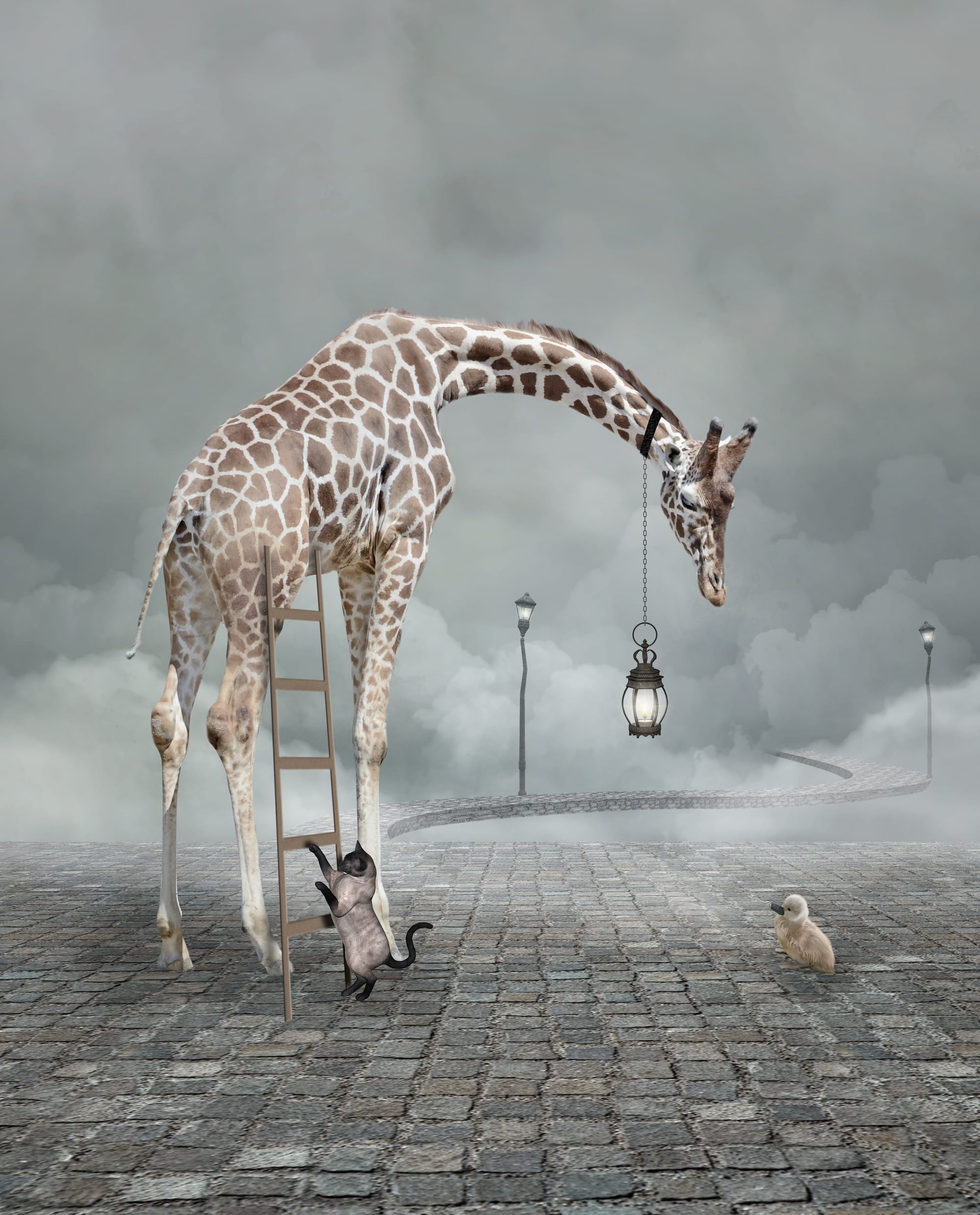
Random people
There are eight billion people in the world, and it is impossible to hold this number in one's imagination, just as it is impossible to imagine the entire sky, but our lives are surprisingly selective: we meet only hundreds, truly talk to dozens, and let into the depths only a very few, those whose names then resonate within us longer than the conversation itself lasted.
Jung called this not an accident, but an internal law, according to which the soul attracts not those who are convenient or desirable, but those who are necessary for its movement, growth and quiet, sometimes painful, but always precise maturation.
There are important people, and their presence is felt immediately—not as a flash, but as a stable weight, like a serious accessory that becomes part of one's image: with them, not only one's mood changes, but also the trajectory of one's decisions, the pace of one's steps, the intonation of one's internal dialogue, and even after their departure, the feeling remains as if a new supporting line has appeared in the structure of one's life.
There are people with a smile from a past life, with whom you don’t need to explain yourself or prove your right to be, because it’s as if an invisible agreement of trust already exists between you, and their gaze carries a strange warmth of recognition, as if the body remembers what the mind is unable to restore, and therefore, next to them, it becomes quieter and softer inside.
And then there are the unexpectedly bold ones, those who enter the space of life without an invitation, breaking the usual symmetry, touching us with words, gestures, intonations, forcing us to lose our balance and look at ourselves without the usual filters, and that is precisely why they are so disturbing and so memorable, because most often it is through them that the psyche shows us our Shadow - that strength, that courage, that truth that we did not dare to admit as our own.
Jung wrote that the strongest reactions—irritation, attraction, sudden closeness, or inexplicable repulsion—rarely have anything to do with the person themselves; more often, they point to internal processes that are asking to be seen, acknowledged, and experienced.
Over time, we begin to notice that it's not so much the people themselves that matter, but who we become around them: with some, we shrink back and speak more quietly, with others, we straighten our shoulders, with others we learn to say "no," and with others, for the first time, we allow ourselves to be vulnerable, without fear of losing our form and dignity.
At this point, a desire arises to stop, sit in silence, take a piece of paper and slowly remember those who once crossed our path, not judging their significance by duration or status, but listening to the feeling: who warmed us, who changed direction, who left emptiness, who taught us boundaries, and who taught us softness.
And perhaps the most mature and most beautiful question arises not about them, but about ourselves - who we were in their lives, not a role or a function, but a state: support, a challenge, a transition, a mirror or a quiet sign on the road that appears only for a moment, but without which the path would have turned out differently.
There are no random people, there are meetings designed in different styles - some like classic, others like bold avant-garde, others like vintage, which people return to not for fashion, but for the feeling, and if at least one person has ever looked at you and seen more than the outer contours, then this meeting was necessary, even if it lasted only a few moments.
On the importance of meeting
Those who were able to hear life deeper than the surface always wrote about the importance of meeting, because the meeting itself is not a fact of biography or a crossing of routes, but a moment in which the inner and the outer sudd
